Types of Island
拼組島的幾種樣子
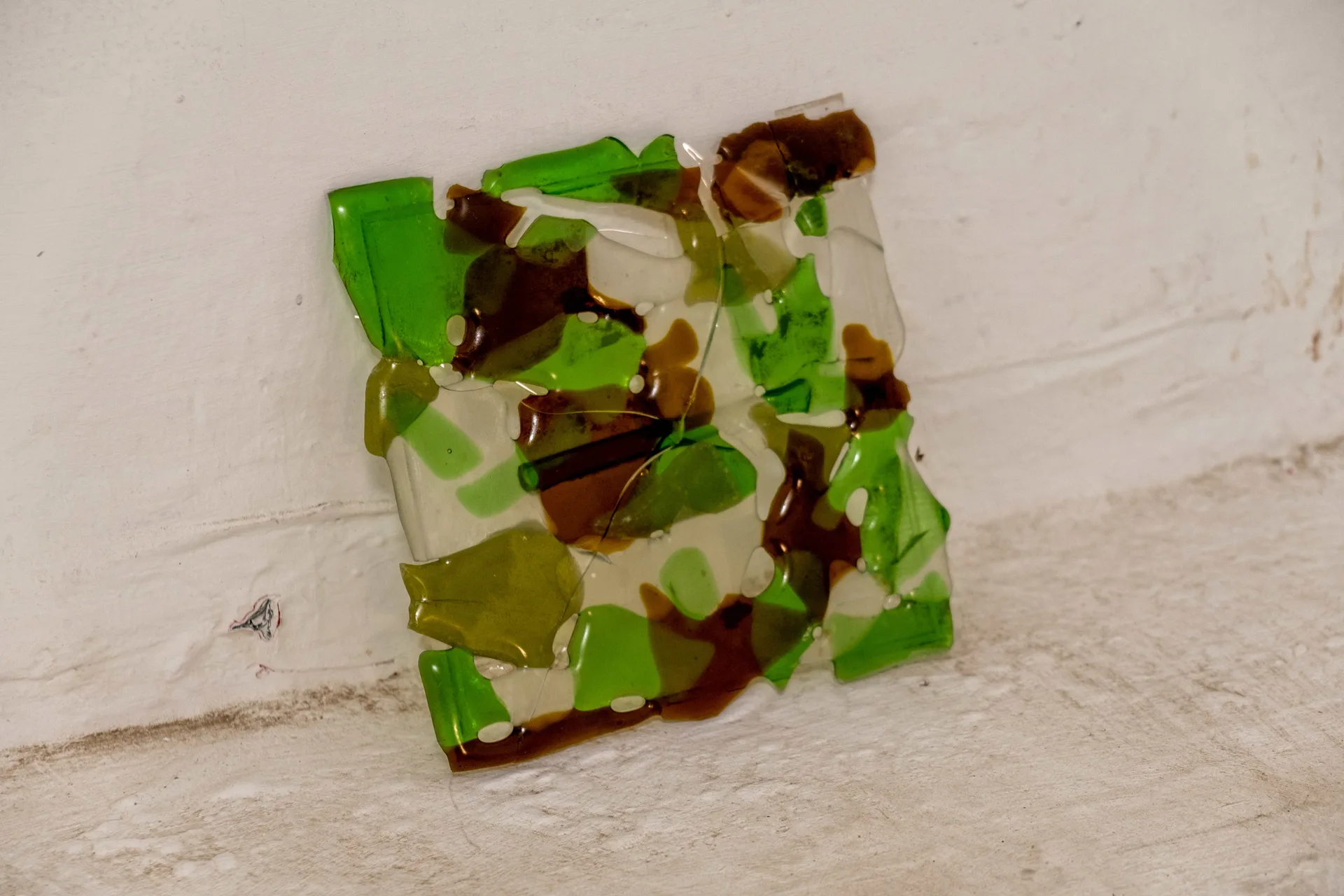
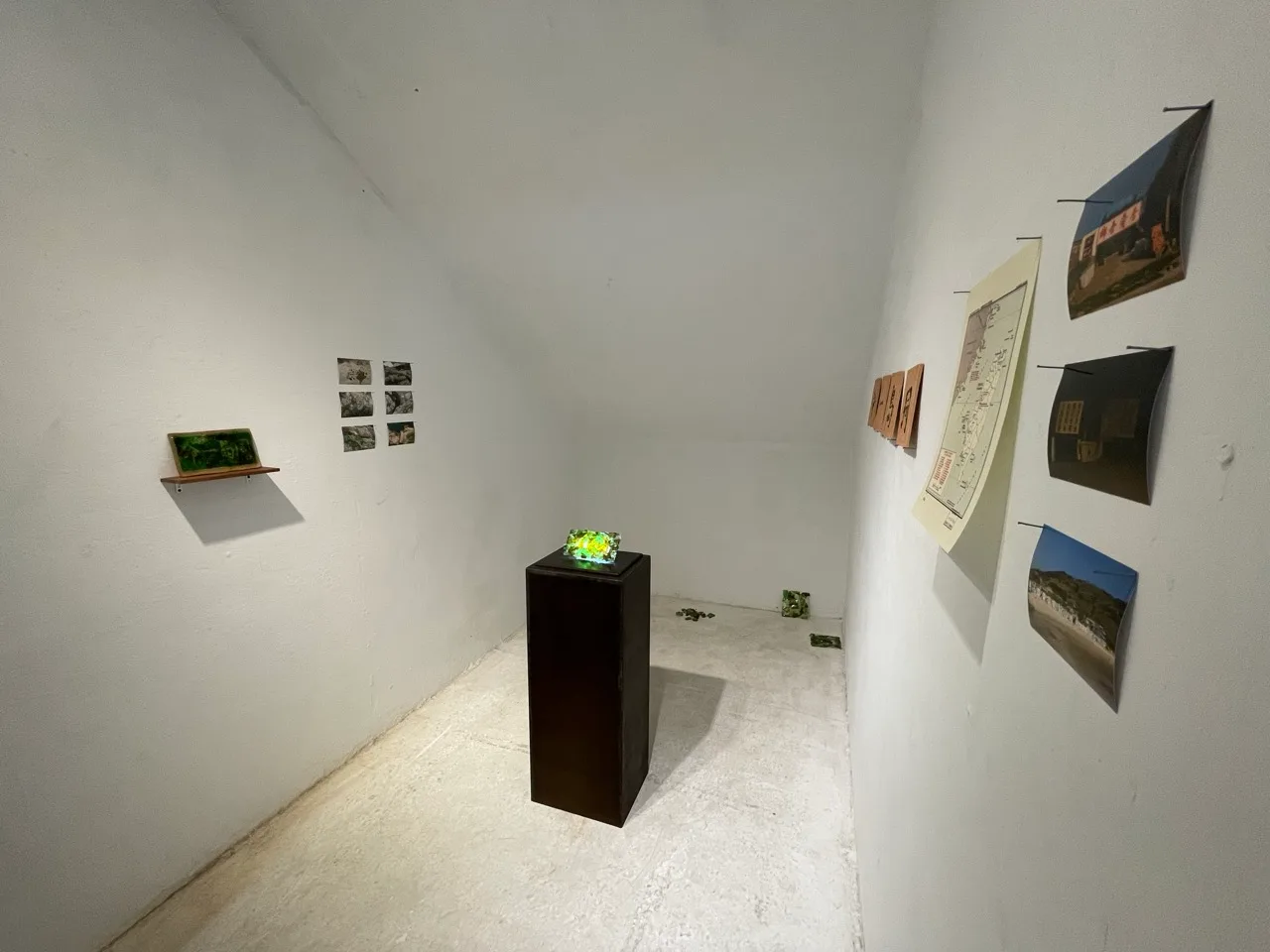
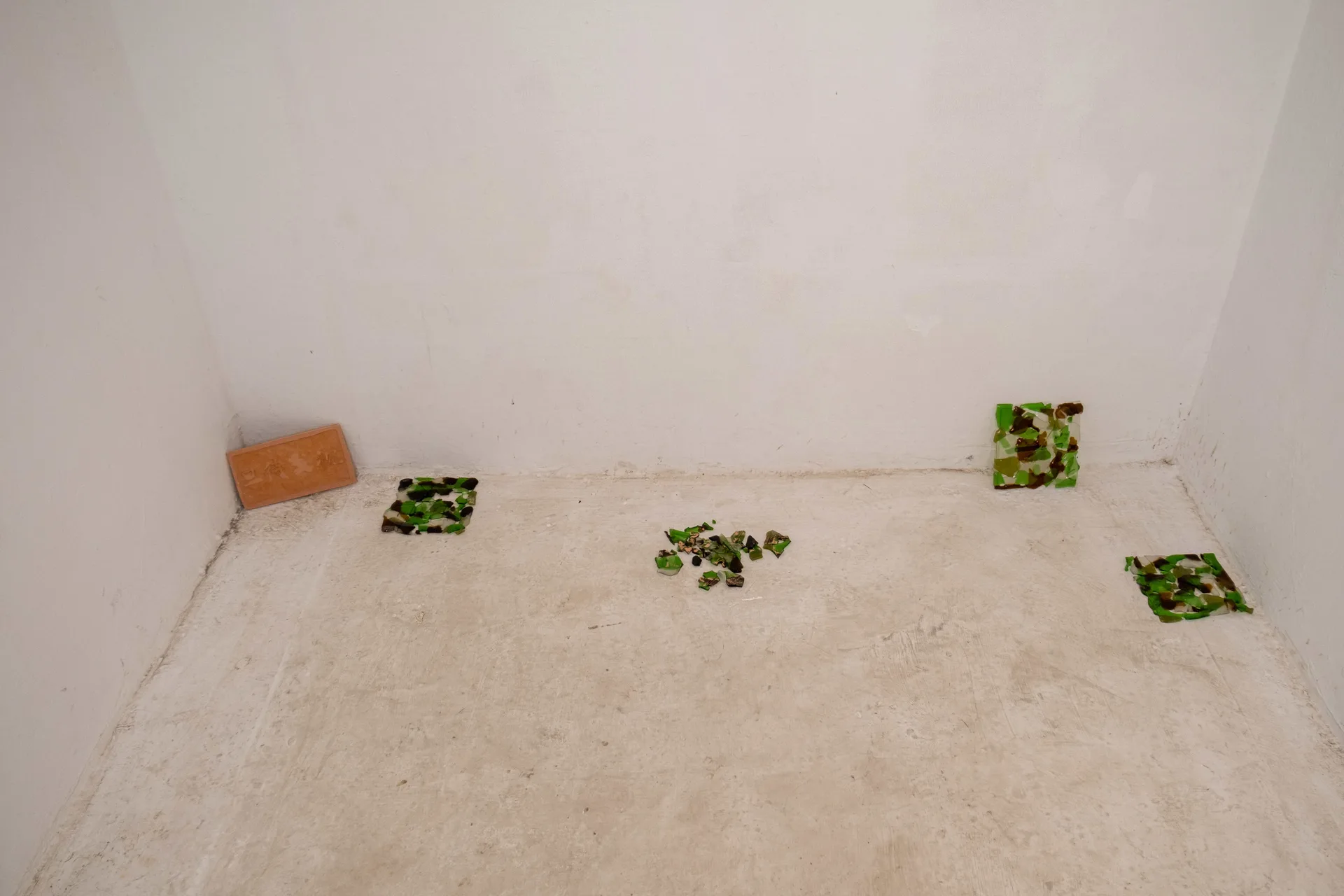
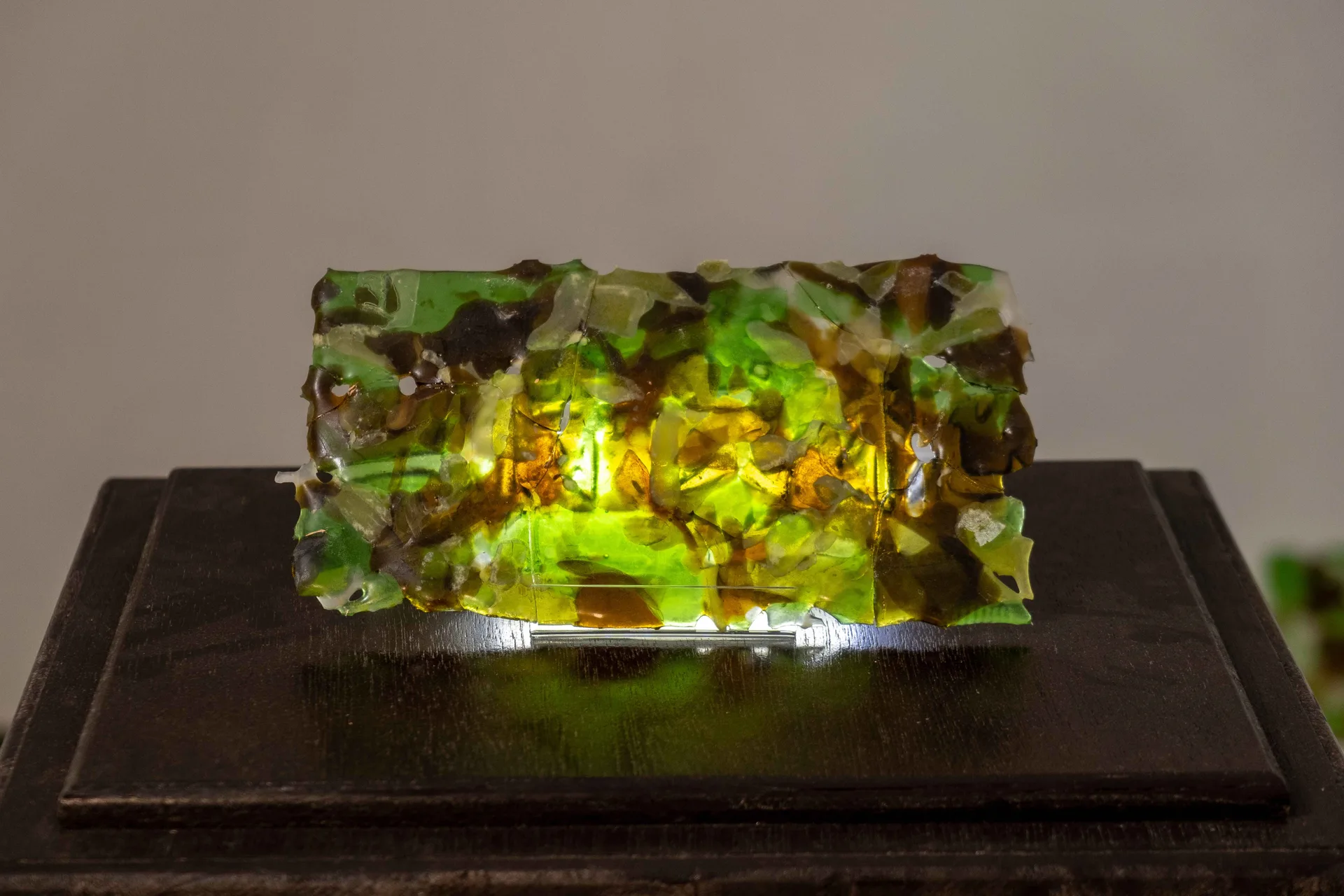
《拼組島的幾種樣子》的作品發想於一段我短暫的生活經驗在台灣的離島。在這座小島上可以容易的在沙灘發現許多小玻璃。我推測這些玻璃也許來自於生活中的玻璃瓶罐,或是來自於戰略關係的遺留下來的玻璃刀山。因為馬祖是一座離中國很近的島嶼,因此留下許多因戰爭而存在的裝置,而玻璃刀山就是其中一個來防止中國士兵游泳上岸的裝置,如今還能看到這些。
我發現這些在海灘上撿拾來的玻璃的色彩與島的色彩相似,也恰好和軍事安全防備的迷彩配色相似。《拼組島的幾種樣子》這件作品試圖將這些我觀察到的訊息與顏色拼湊起來。我透過撿拾玻璃碎片,重新再高溫融合拼組成文字,這些文字是馬祖島上隨處可見的政治宣傳標語。
對我來說,這些聳動的政治宣傳標,和軍事用途的玻璃裝置一樣,是島上經歷過複雜的戰爭歷遺留下的物件,看起來已不合時宜,但因為時間的關係已經與島上的景貌融為一體。
The work Types of Island was inspired by my brief time living on one of Taiwan's outlying islands. On the shores of the small island, I often encountered various shards of glass strewn along the beach. I speculated that these glass fragments might have originated from everyday glass bottles or perhaps remnants left behind for strategic reasons. Given Matsu's proximity to China, the island hosts numerous remnants of wartime conflicts, including glass shard barricades — referred to as glass knife mountains — erected to impede Chinese soldiers from reaching its shores by swimming. These installations can still be observed today.
I noticed that the glass collected from the beach was similar in color to the island itself, which also happened to resemble the camouflage color scheme of military equipment. The work Types of Island tries to piece together the information and colors I observed. I picked up glass shards, re-fused them at high temperature to form characters, and these characters are political propaganda slogans visible throughout Matsu Island.
For me, these provocative political propaganda slogans are akin to the glass installations serving military purposes. Just like the glass installations, they are objects left behind by the island's complex history of warfare. They may appear out of place now, but due to the passage of time, they have become an integral part of the island's landscape.