Gathering the Distance — Solo Exhibition
個展:一座遠方
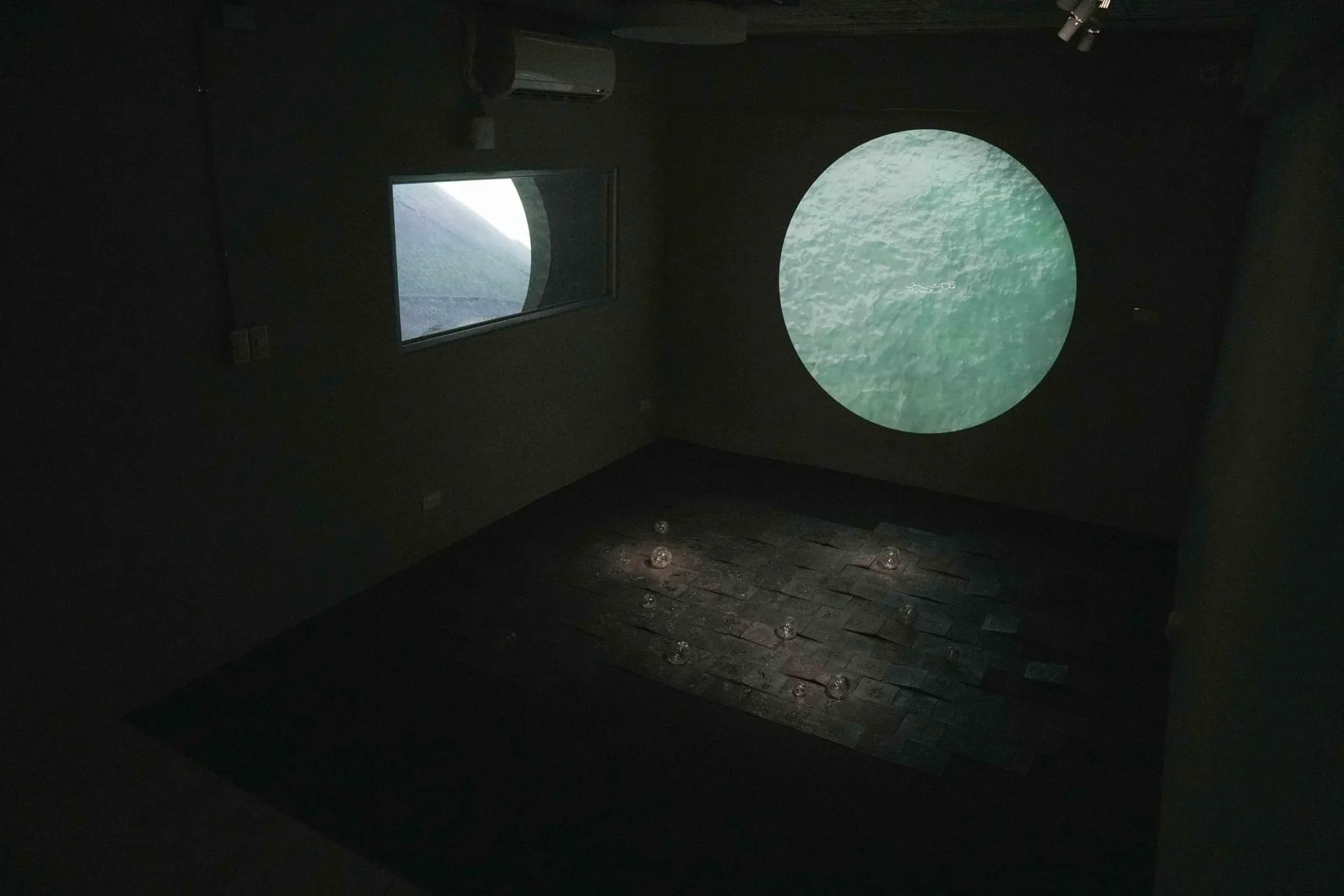
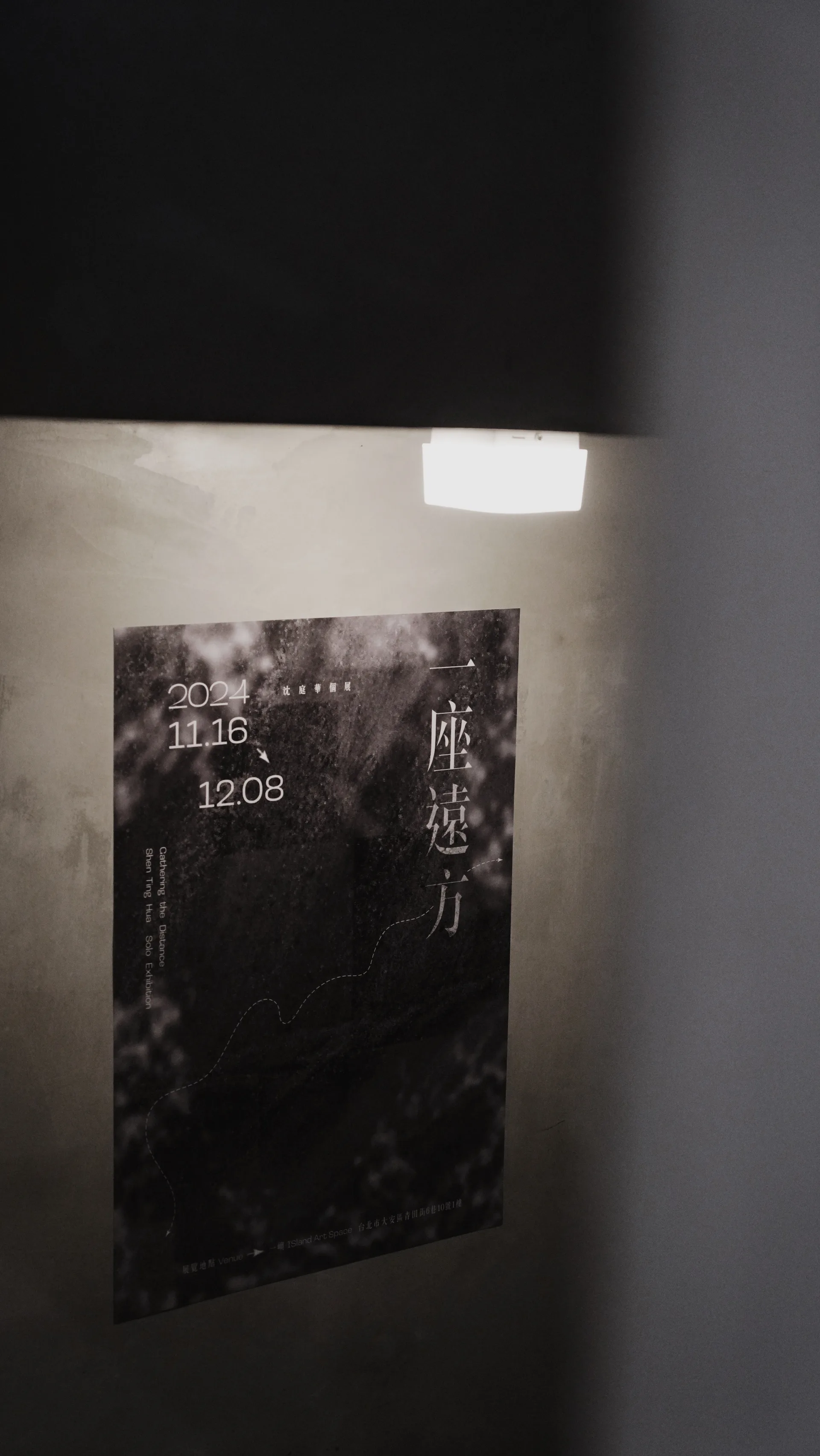
撿拾作為過去以來的創作起點,對拾得物觀察、探究並與之進行想像,而此次展覽《一座遠方》容納了這幾年來的收集與成果,由在北海岸撿拾到了來自遠方的小石頭出發,串起了對於不同地方的探索與想像。展覽由三件著要作品建構而成:《另一座口》、《海平面上的虛線》以及《新島再製》。
2021年在日本火山島鏈上一座名為福德岡之場的海底火山再次爆發,大量的火山浮石碎屑在海上堆積,逐漸形成一座新的島嶼,而這座新島的誕生引起了對於是否增加領土和領海面積的討論。在台灣也能撿拾到這些來自遠方的火山產物,浮石小島隨著時間的推移,逐漸變得支離破碎,乘著海浪、風漂移至各處。
此展覽中《新島再製》是結合過去兩件作品,由好像「撿拾到一塊他方的領土」的想像出發,透過撿拾、燒製轉換物質的狀態等行動,連結自身製陶的經驗,試圖還原亦或是擬造像是這樣無法親臨現場的自然龐大事件,延伸了對無法觸及的生命經驗所產生的一種想像。由於火山石的成分與陶藝釉藥相似,火山熔岩的噴發溫度與燒製陶瓷的溫度接近,兩者皆源於地球的內在力量,並在不同條件下產生多樣的產物,模擬火山高溫下熔岩的質地與它的色彩,想像火山就像一座巨大窯爐,而石頭們都是外殼、是大地的釉。
作品《另一座口》與《海平面上的虛線》是相較於先前被動撿拾外來碎片的行為,更主動地前往未曾踏足的遠方,像是今年走訪了幾座位於義大利的火山,《另一座口》試圖透過影像、聲音裝置傳遞異地的感官經驗。《海平面上的虛線》則是利用了駐地交流的機會,探索了同樣的地理位置鄰近火山島鏈旁的沖繩,了解他們是如何運用被視為天災的火山產物,也與當地的工藝師合作製作了部分作品。展覽的空間裝置試圖呈現這些來自不同遠方帶回的物件,在串連和比對這些被帶回的物件時,突然感受到,它們不再那麼遙遠了。
Gathering the Distance continues the creative trajectory I have developed over the past two years, evolving from my works New Island (2022) and New Island II (2023). In 2021, the eruption of the Fukutoku-Okanoba submarine volcano in Japan produced a large amount of volcanic pumice, which gradually formed a new island in the sea. The birth of this island sparked widespread discussion in Japanese media and among the public, with some even speculating about its potential to expand territorial and maritime boundaries. This event piqued my interest, as these volcanic products from afar could also be collected along the coast of Taiwan.
The current exhibition, Gathering the Distance, connects past works with new experiences gained during travels to Italy and Okinawa. Compared to my earlier, more passive collection of fragments from afar, this time I actively ventured to places I had never visited before. Ceramics and clay sculpture have long been my primary creative media, and the natural materials I collect often merge with the pottery-making process. The composition of volcanic rocks is similar to ceramic glazes, and the temperatures at which lava erupts are close to those used in firing ceramics. Both are derived from the Earth's internal forces, producing diverse materials under varying conditions. As I cataloged and compared these stones, I suddenly realized: they no longer feel so distant.
Another Entrance
另一座口
2025 單頻錄像、聲音裝置 Single-channel video, sound installation, 4'07''
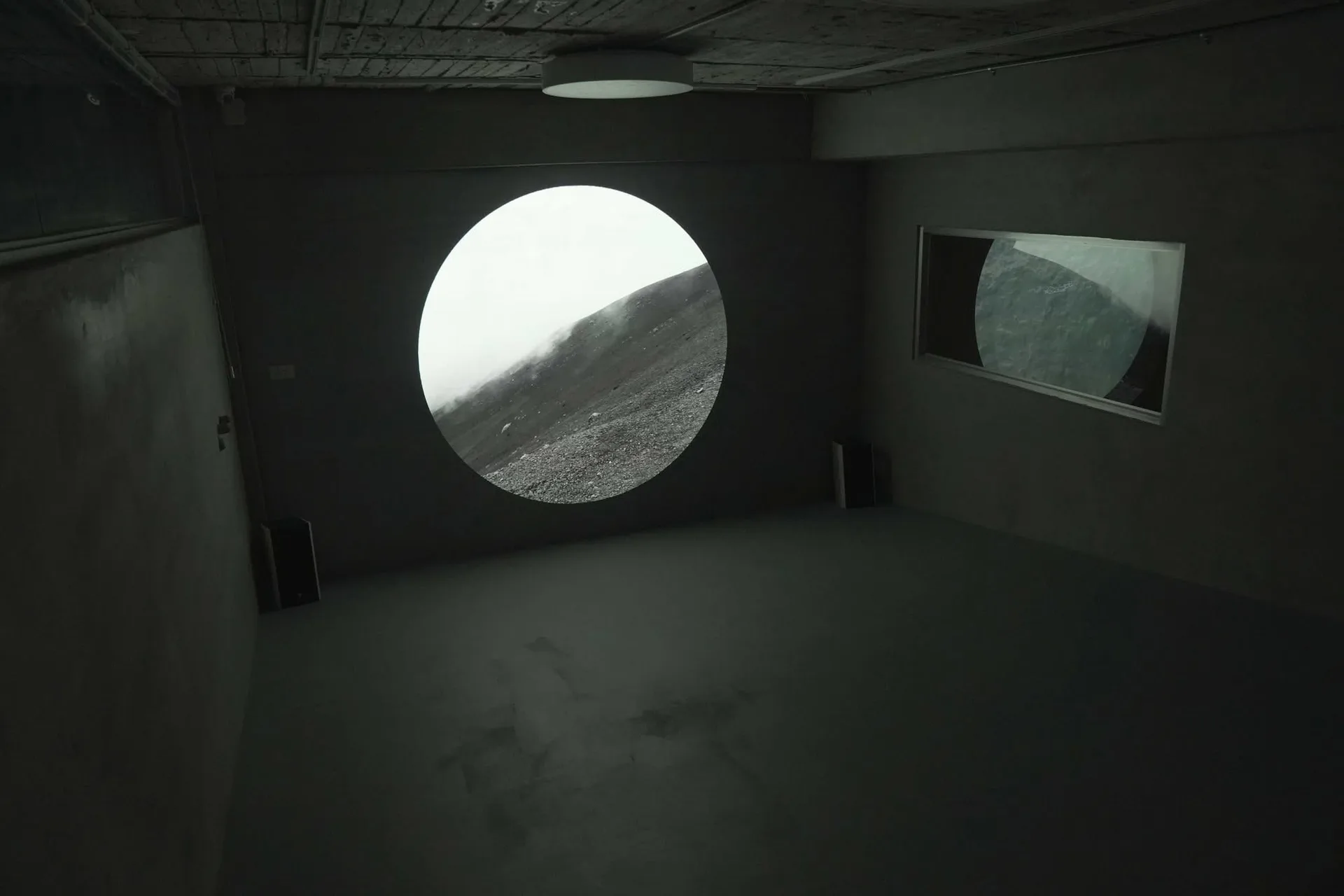
海拔三千公尺的埃特納(Etna)火山上,灰矇矇一片的火山石大地一望無際,讓人一時之間不知身在何處,彷彿來到世界盡頭。凝視著奄奄一息的火山口,忍不住想像著它究竟通往哪個深處,繼續往下又從哪一個口冒出?火山的難以親近總是令人有多重想像,而不可抵達之處更添異空間的幻想。阿塔納修斯‧基歇爾 (Athanasius Kircher) 在1664出版的「地下世界」書中,以插圖展現了他對地底的想像,每個火山口都有藏著自己的火苗,而火苗延伸下是互相串連的,並蔓延了整個地球。2024年的6月,我來到義大利西西里島的埃特納火山,隨後前往伊奧利亞群島尋找火山的蹤跡。這趟旅程中,我意外發現,這裡正是《地心歷險記》中幻想出口的所在地。我希望將這些在遠方的身體與視覺經驗帶回,與過去接觸的事物共振,產生迴響。
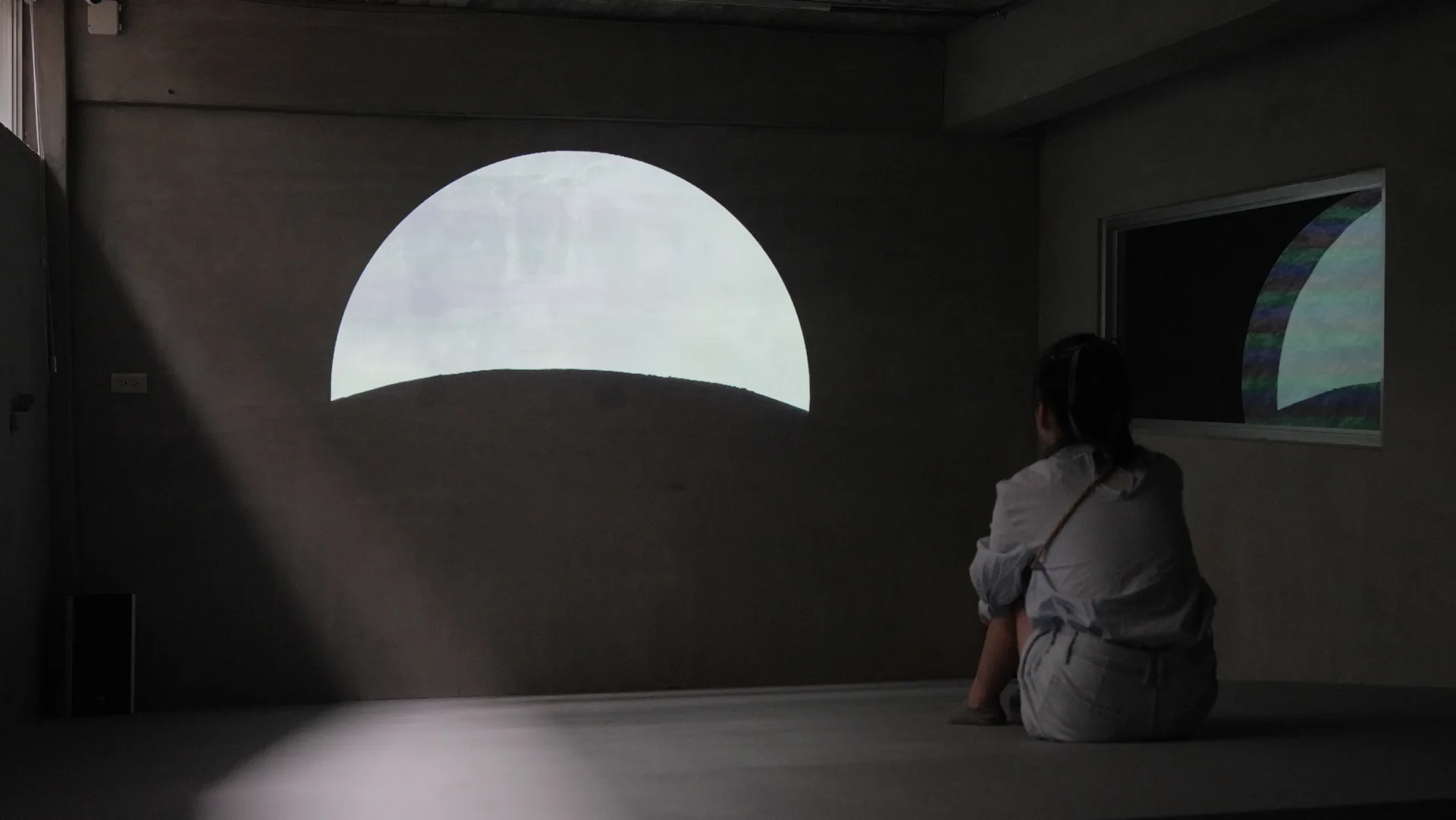
這件《另一座口》是一件融合影像與聲音的裝置作品,試圖重現我在義大利攀登火山時的身體記憶。影像前方設置了一座可供坐臥的傾斜木作結構,觀者在其上可感受到自底部傳來的微弱震動,宛如置身火山口邊緣。影像從火山遠景緩慢推進至一顆石頭,再進一步聚焦其表面的裂紋與質地,如同在顯微鏡與望遠鏡之間切換,穿梭於地景的宏觀與微觀尺度。
At three thousand meters above sea level, the volcanic landscape of Mount Etna stretches endlessly in shades of grey — a disorienting vastness that makes one lose all sense of place, as if standing at the edge of the world. Gazing into a barely breathing crater, one cannot help but wonder where it leads, how deep it goes, and from which other opening it might eventually emerge. The volcano's inapproachability has always invited layers of imagination, and the unreachable only deepens the fantasy of an otherworldly space.
In his 1664 publication Mundus Subterraneus, Athanasius Kircher illustrated his vision of the earth's interior — each volcanic crater harboring its own flame, all connected beneath the surface. French author Jules Verne, in his 1864 novel Journey to the Center of the Earth, likewise used a volcano as an entry point, imagining a passage through the earth's core. In June 2024, I traveled to Mount Etna in Sicily, Italy, and then set out across the Aeolian Islands in search of further volcanic traces. It was during this journey that I discovered, unexpectedly, that I was standing in the very place Verne had imagined as the exit point in his novel.
Another Entrance is an installation that merges image and sound, seeking to reconstruct the bodily memory of climbing a volcano in Italy. In front of the screen, an angled wooden structure is placed for viewers to sit or lie upon. The footage moves slowly from a distant view of the volcano toward a single stone, then closer still — into the cracks and textures of its surface — shifting between the scale of a telescope and a microscope, traversing the landscape at once in its vastness and its intimacy.
Dotted Line on the Sea
海平面上的虛線
2024 單頻錄像 Single-channel video, 01′30″
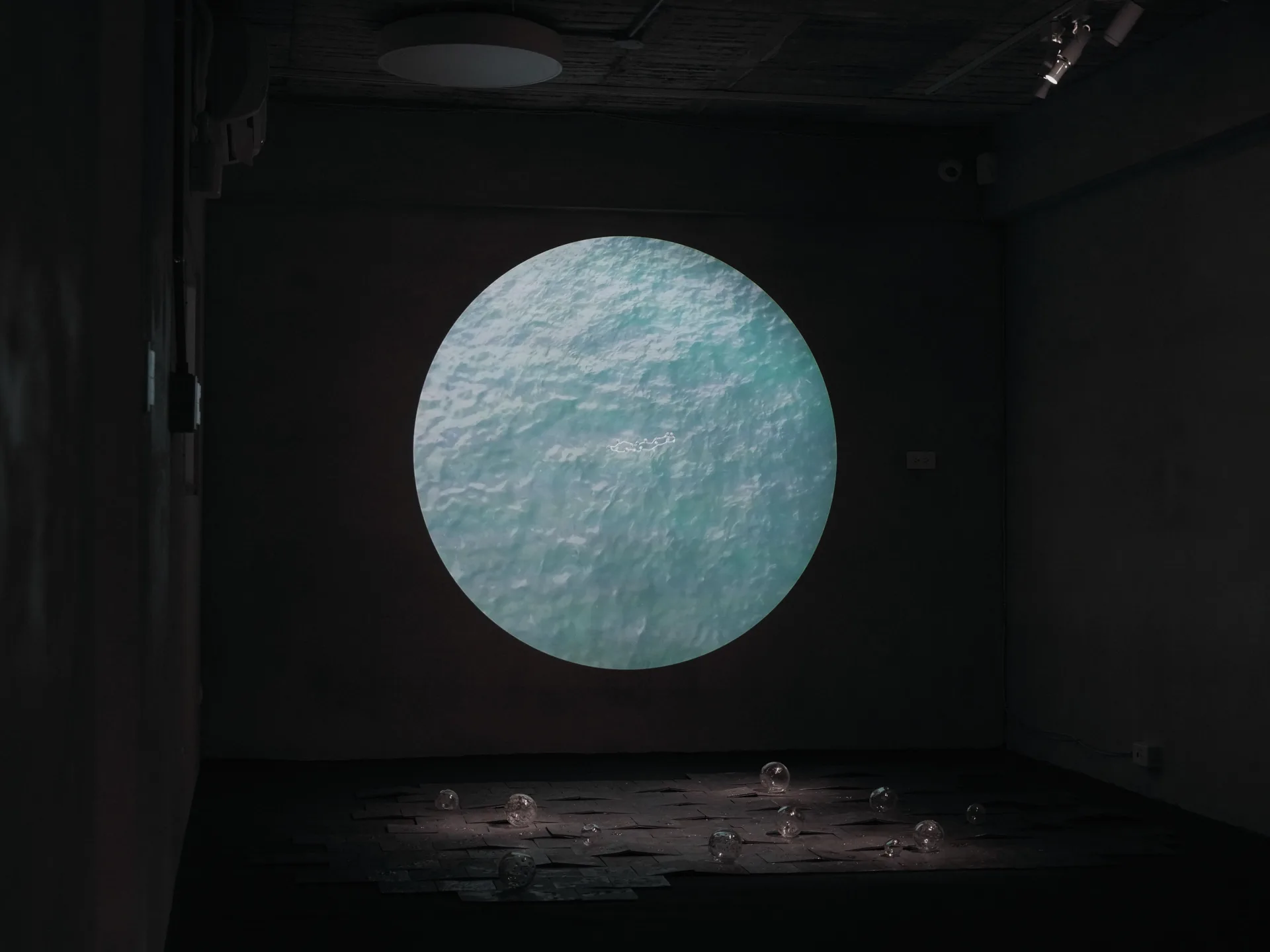
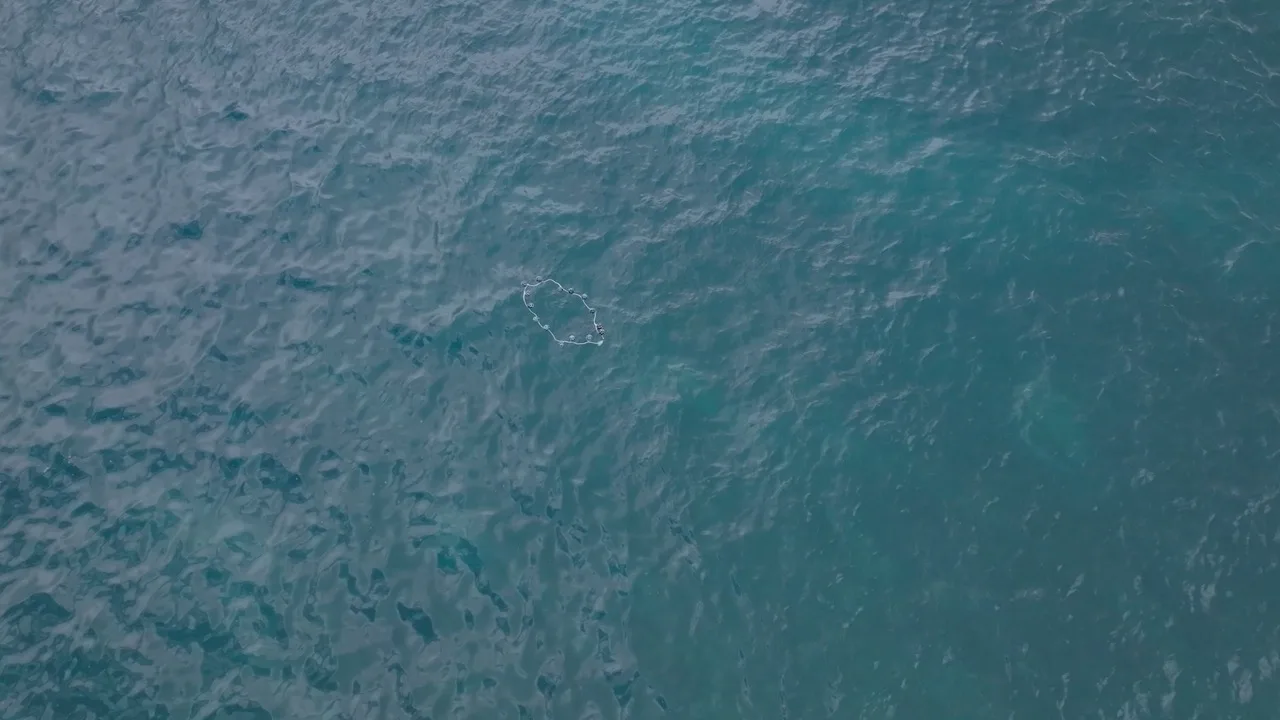
大量浮石在海上聚集時稱之為「浮石筏」(Pumice raft),甚至可形成衛星圖上可見的小島,並隨洋流逐漸移動。浮石筏宛如海上的浮島,忽大忽小,並承載著生命,而這幾年來海底火山的躁動,已經為地球孕育出好幾座新的島,但隨著浪、風的力量,四散各處,藉著這樣飄忽不定的概念,以曾經組成過新島嶼的浮石作為主要原料,再製而成玻璃浮球,以它們作為拍攝對象,而在畫面裡,浮球們因為浪的推移,在海面上不停改變著自身的形狀。
When large quantities of pumice gather on the ocean's surface, the formation is known as a "pumice raft" — capable of growing large enough to appear as a small island in satellite imagery, drifting gradually along ocean currents. Like floating islands at sea, pumice rafts shift in size and carry life within them. In recent years, the restlessness of underwater volcanoes has given birth to several new islands on earth — yet under the force of waves and wind, they scatter and disperse across the ocean.
Drawing on this idea of restless, elusive movement, the work takes pumice — once part of a newly formed island — as its primary material, remaking it into glass floating spheres. These spheres become the subjects of the film. On screen, pushed and pulled by the motion of the waves, the spheres continuously change their formation on the surface of the sea.
Recreating the New Island
新島再製
2024 玻璃、LED、陶瓷、火山浮石 Glass, LED, ceramics, volcanic pumice
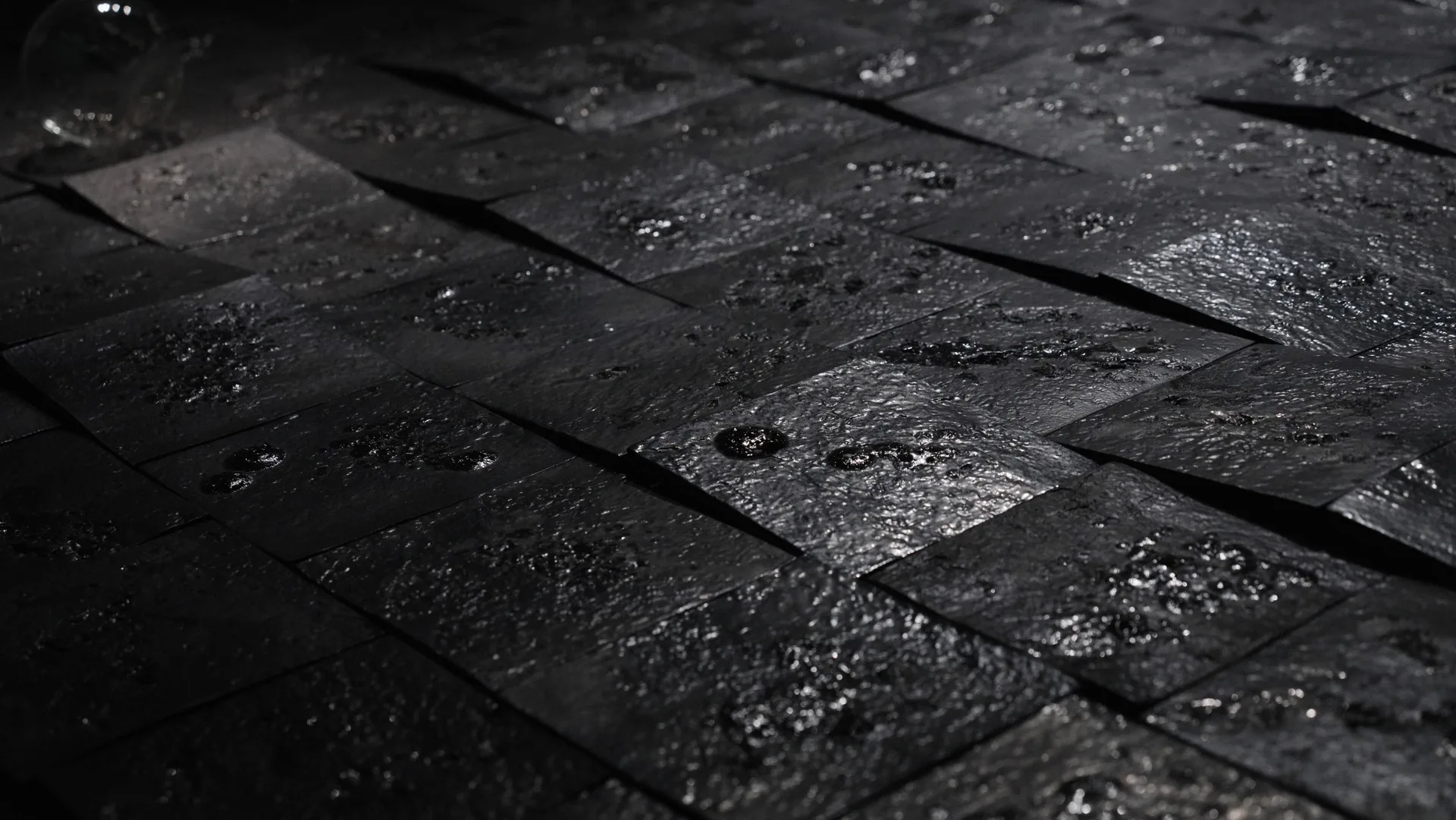
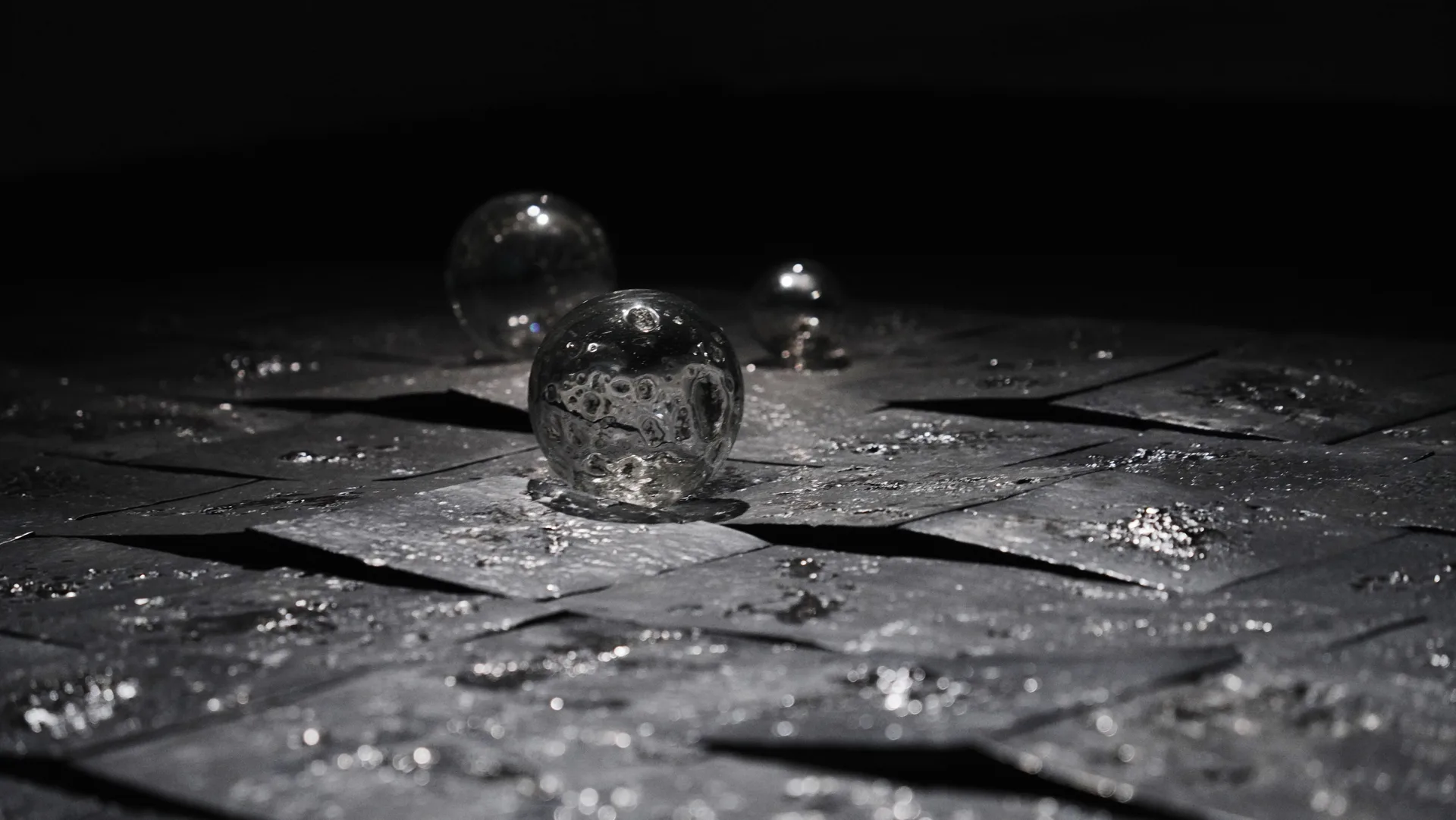
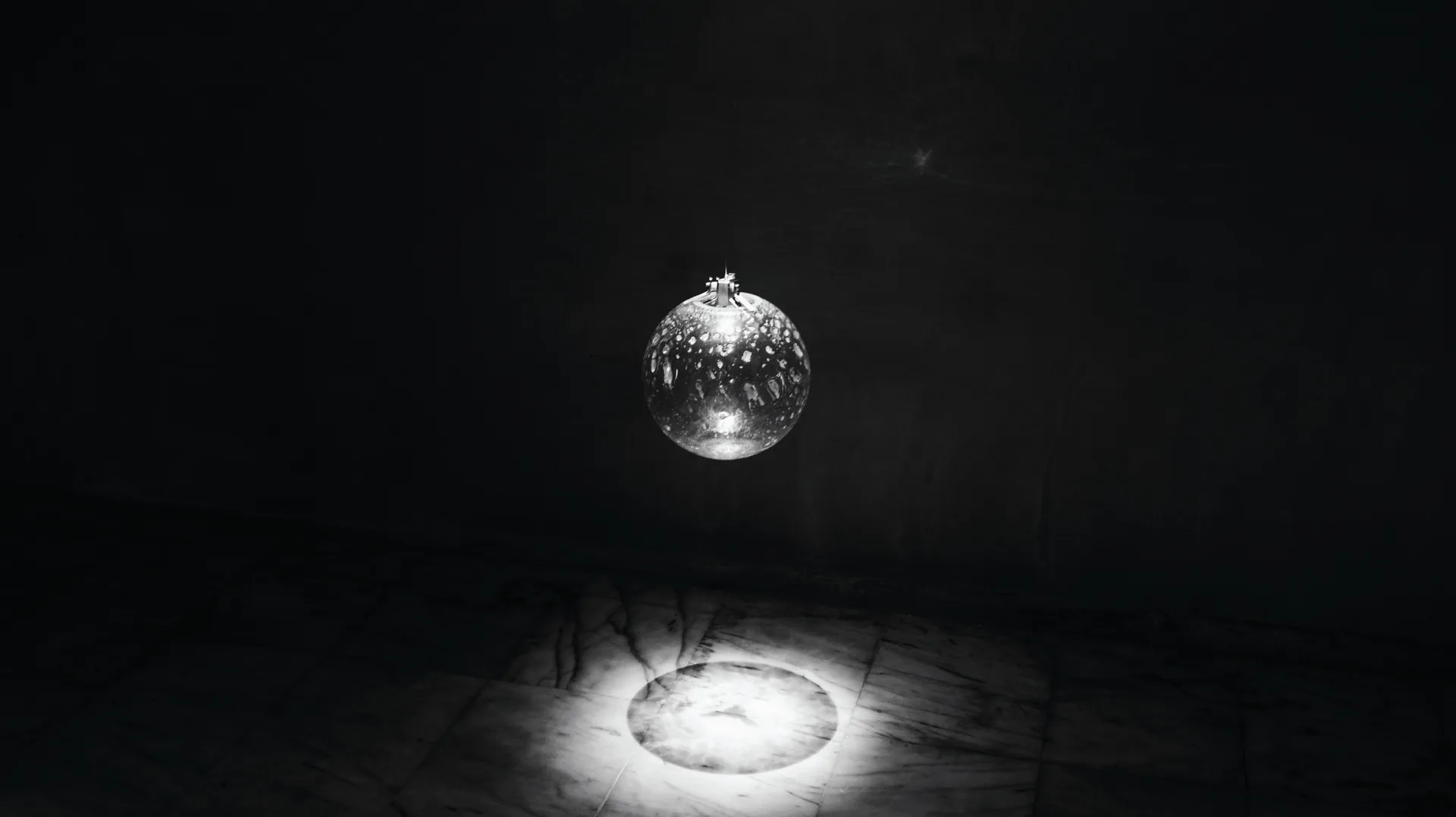
靈感來自日本福德岡之場海底火山爆發形成的浮石小島。以想像撿拾到他國領土為出發點,研究浮石成分,發現其中含有大量玻璃質,與陶瓷釉料和玻璃製作過程相似。通過將浮石作為材料,製作成磁磚和玻璃浮球等,並透過影像裝置呈現技術媒介與真實的遙遠,試圖拼湊遙不可及的自然脈動,呈現對自然力量的探索和想像。
地板上的磁磚像土地尺寸的單位,也像拼圖板塊,散落在地上的玻璃浮球內的色彩和材質是浮石敲碎和高溫燒製後的顏色,它們漂浮移動如同海上的浮球,像小座標。
The work draws its inspiration from the pumice island formed by the underwater eruption of Japan's Fukutoku-Okanoba volcano. Taking as its starting point the imagination of having picked up a fragment of another country's territory, the artist researched the composition of pumice and discovered that it contains a high proportion of silica glass — a material closely related to ceramic glaze and the glassmaking process. By working with pumice as a primary material to produce tiles and glass floating spheres, and presenting them through video installation, the work navigates the distance between technological mediation and physical reality.
The tiles on the floor function as units measuring the scale of land, like puzzle pieces or tectonic plates scattered across the ground. Inside the glass spheres, the colors and textures are those of pumice after it has been crushed and fired at high temperatures — floating and shifting like buoys on the sea, like small coordinates adrift.