Colors from the Flames
土地的變容
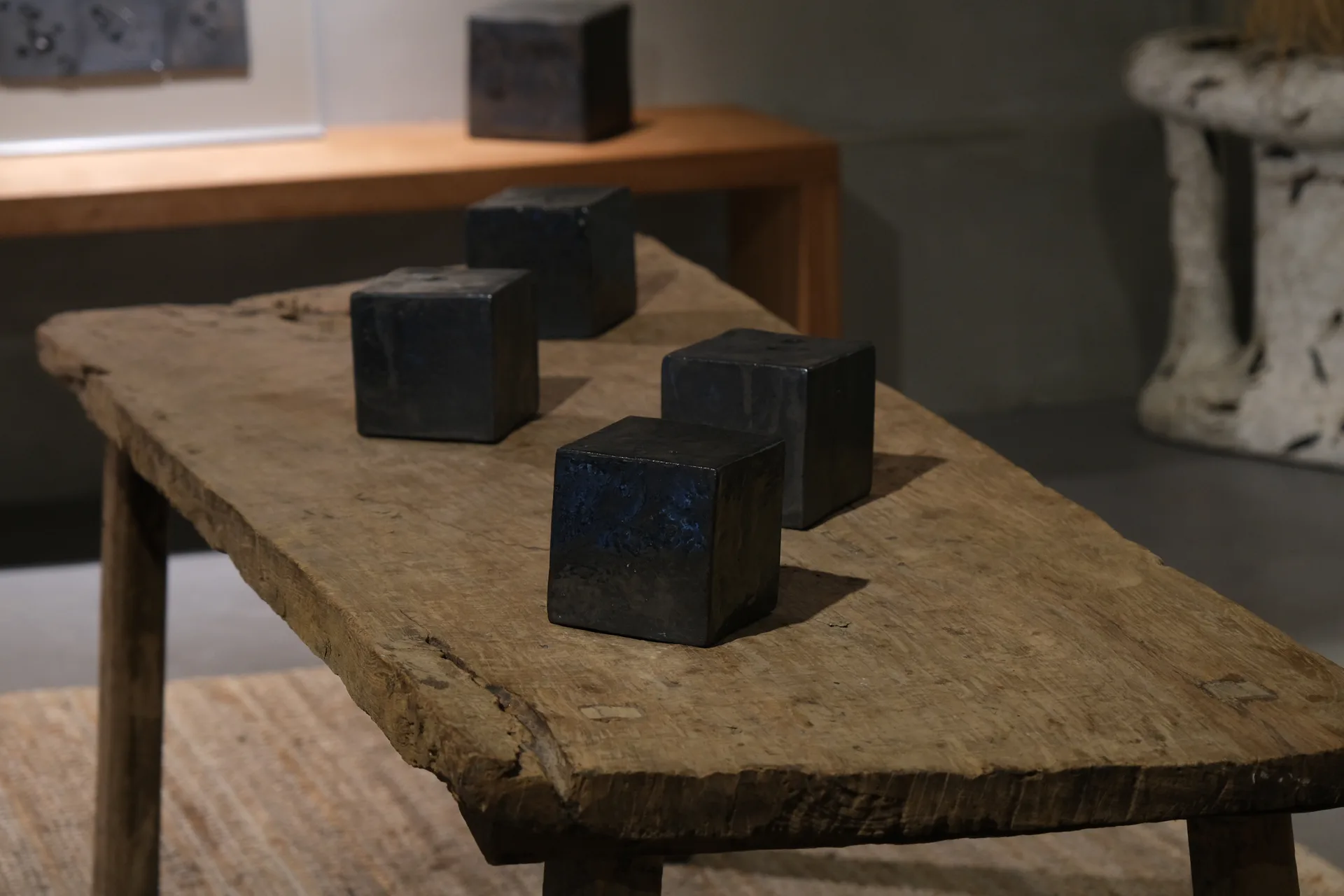
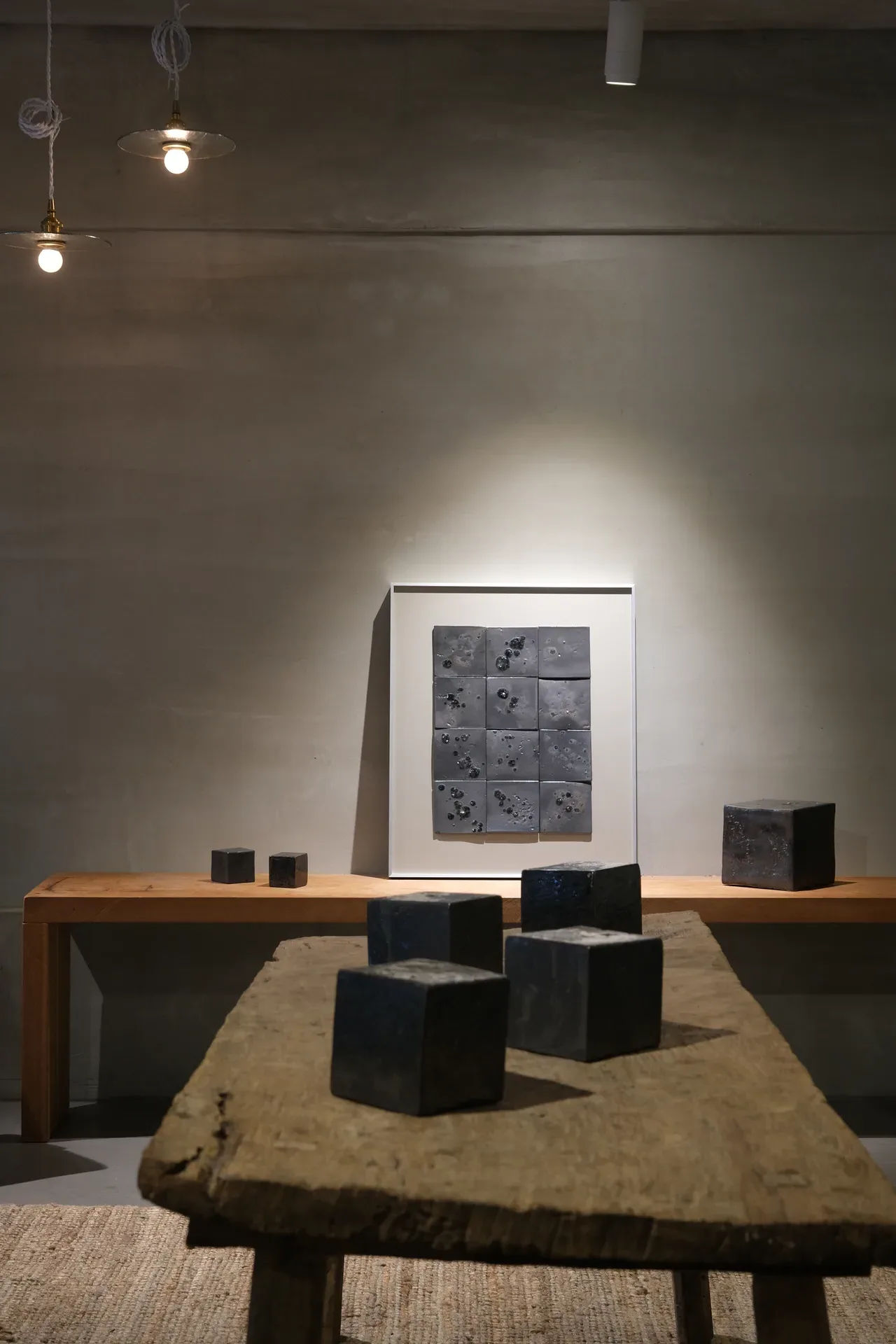
《土地的變容》創作計畫延續藝術家沈庭華過去兩年圍繞火山浮石與地質變動的創作脈絡,從《新島》(2022)到《一座遠方》(2024)逐步展開,聚焦於「撿拾到一塊他方的領土」的概念。透過撿拾與燒製等實踐行動,回應自然事件所帶來的物質轉化與時間痕跡。
靈感源自2021年日本福德岡之場海底火山爆發所生成的浮石島嶼。這些浮石隨洋流漂流,最終抵達台灣沿岸,曾引發日本社會對領土擴張的討論,也象徵土地生成與消逝的自然動態。藝術家以這些火山石與浮石作為創作媒材,結合自身陶藝經驗,探索熔岩、釉藥與地殼之間的內在關聯。
《土地的變容》將火山視為一座巨大的窯爐,而石頭則是大地的釉。每一塊漂流而來的石頭,既是異地自然地景的殘片,也是一段無法親歷卻能透過燒製再現的地質記憶。
此次展出的作品系列名為「島的單位」,由平面陶板與陶板構成的立體方塊組成。延續過往《新島》作品中磁磚形式的發想,這些作品以「撿拾到一塊他方領土」的想像為出發,透過幾何形狀連結網格與拼圖的語彙,象徵一種拆解土地、描述地貌的單位方式。
Colors from the Flames continues artist Shen Ting-Hua's creative trajectory developed over the past two years around volcanic pumice and geological transformation — unfolding progressively from New Island (2022) to Gathering the Distance (2024) — centering on the concept of "picking up a fragment of another territory." Through the practices of gathering and firing, the work responds to the material transformations and temporal traces brought about by natural events.
The project draws its inspiration from the pumice island generated by the 2021 underwater eruption of Fukutoku-Okanoba volcano in Japan. These pumice stones drifted along ocean currents and eventually reached the shores of Taiwan, sparking discussions in Japan about territorial expansion, while also symbolizing the natural dynamics of land formation and disappearance. Working with volcanic rock and pumice as artistic materials, and drawing on her own ceramics practice, the artist explores the inner connections between lava, glaze, and the earth's crust.
Colors from the Flames envisions the volcano as a vast kiln, and stone as the glaze of the earth. Each drifting stone is at once a fragment of a distant natural landscape and a geological memory — one that cannot be lived through directly, yet can be re-embodied through the act of firing.
The series presented in this exhibition, titled Units of an Island, consists of flat ceramic slabs and three-dimensional cubes constructed from ceramic panels. Building on the tile-based forms explored in the earlier work New Island, these pieces take as their starting point the imagination of "having picked up a fragment of another territory." Through geometric forms that invoke the language of grids and puzzles, they propose a unit-based way of dismantling and describing the contours of land.